Real-Time Multi-Timeframe Currency Strength: A Smarter Way to Read the Forex Market

One of the biggest challenges in forex trading is not entries it’s direction.

Most traders spend hours analyzing charts, indicators, and patterns… yet still struggle with one key question:

Which currency should I actually be buying or selling right now?

The answer lies in understanding real-time currency strength and weakness across multiple timeframes.

In this article, we’ll break down:

  • What real-time multi-timeframe (MTF) strength analysis is
  • Why it matters more than indicators
  • How to use it to build a clear trading bias

What is Real-Time Multi-Timeframe Currency Strength?

At its core, this concept is simple:

It measures how strong or weak each currency is, not just on one timeframe but across multiple timeframes simultaneously.

Instead of looking at a single chart like EURUSD, you analyze:

  • EUR strength across the market
  • USD strength across the market

And more importantly:

  • How that strength behaves from M15 all the way to Monthly

This gives you a complete picture of market flow.


Why Most Traders Get It Wrong

Most traders focus on:

  • Candlestick patterns
  • Indicators like RSI, MACD
  • Support & resistance

But they ignore the underlying driver of price:

👉 Currency strength imbalance

A pair moves not because of a pattern but because:

One currency is being bought aggressively, while the other is being sold.

If you don’t track that, you’re trading blind.


The Power of Multi-Timeframe Alignment

Here’s where things get interesting.

When a currency is:

  • Strong on M15
  • Strong on H1
  • Strong on H4
  • Strong on D1
  • Strong on WEEKLY
  • Strong on Monthly

You’re not looking at noise.

You’re looking at sustained market participation.

Key Principle:

  • ✅ Alignment across timeframes = High probability trend
  • ❌ Mixed signals = Choppy / low-quality market

This is the difference between:

  • Random trades
  • Structured, repeatable setups

How Real-Time Strength is Measured

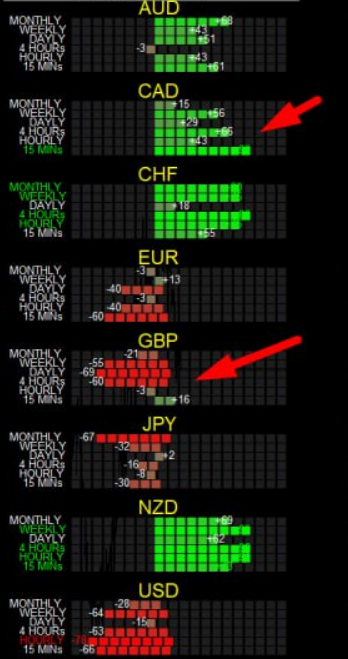
A real-time MTF strength tool aggregates data from multiple currency pairs and calculates relative strength scores.

It then presents this in a clean dashboard or heatmap format, allowing you to instantly see:

  • Which currencies are dominating
  • Which currencies are weak
  • Where clear opportunities exist

Instead of scanning 20+ charts manually, you get clarity in seconds.


How to Use This in Your Trading

Let’s simplify this into a practical framework:

1. Identify the Strongest Currency

Look for consistency across timeframes.

Example:

  • AUD strong from M15 → H4 → D1→ W

2. Identify the Weakest Currency

Same logic—look for alignment.

Example:

  • JPY weak across all timeframes

3. Pair Them Together

Strong vs Weak = Opportunity

Example:

  • AUD (strong) vs JPY (weak)
    AUDJPY Buy Bias

4. Wait for Execution Setup

This is where your edge compounds.

Use:

  • Moving average crossovers or any oscillator indicator of your choice
  • Pullbacks into key zones
  • Session timing (London / NY)

The strength model gives you direction.
Your strategy gives you entry.


5. Avoid Low-Quality Conditions

Stay out when:

  • Strength is inconsistent
  • Multiple currencies show similar strength
  • No clear dominance exists

This alone can eliminate a large percentage of losing trades.


Why Mobile Alerts Are a Game Changer

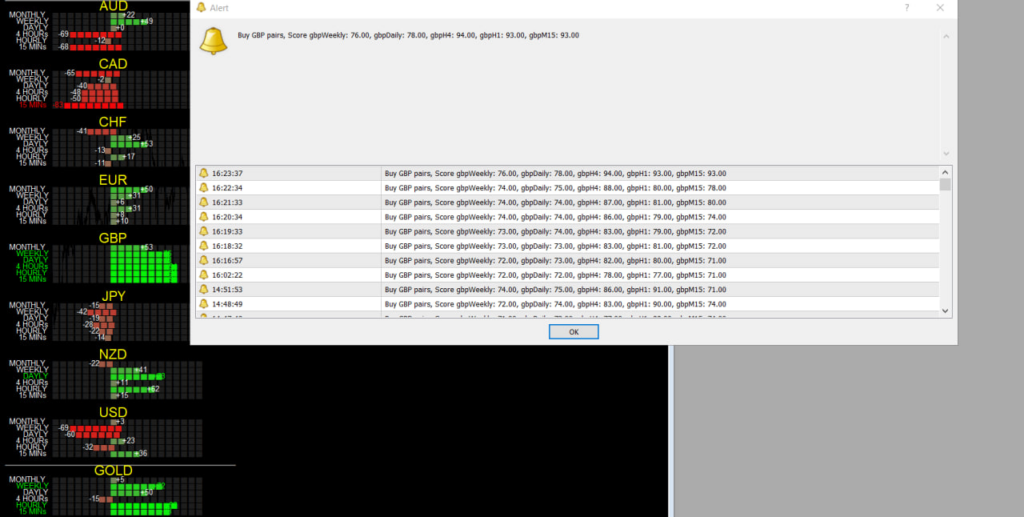
One of the most underrated advantages of a real-time MTF strength tool is the mobile alert feature.

Markets don’t wait for you to sit in front of the screen.

Here’s why alerts matter:

  • Real-Time Awareness
    You get notified the moment market dynamics shift when a currency starts gaining or losing strength across timeframes.
  • Catch Moves Early
    Instead of reacting late, you’re aware when alignment is forming, not after the move is already extended.
  • Perfect Confirmation Layer
    Alerts can act as a confirmation trigger alongside your existing entry strategy.
    Example:
    • You see a pullback setup
    • Alert confirms strength alignment shifting
      → Higher confidence execution
  • Freedom & Flexibility
    You don’t need to monitor charts all day. The system works in the background and alerts you only when something meaningful happens.

In short:

Alerts turn this from a passive indicator into an active trading assistant


Lets see some examples

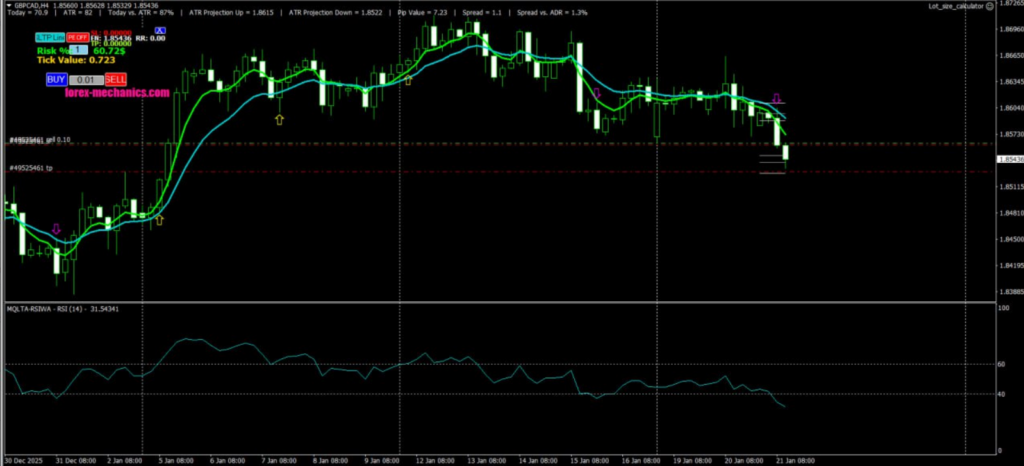
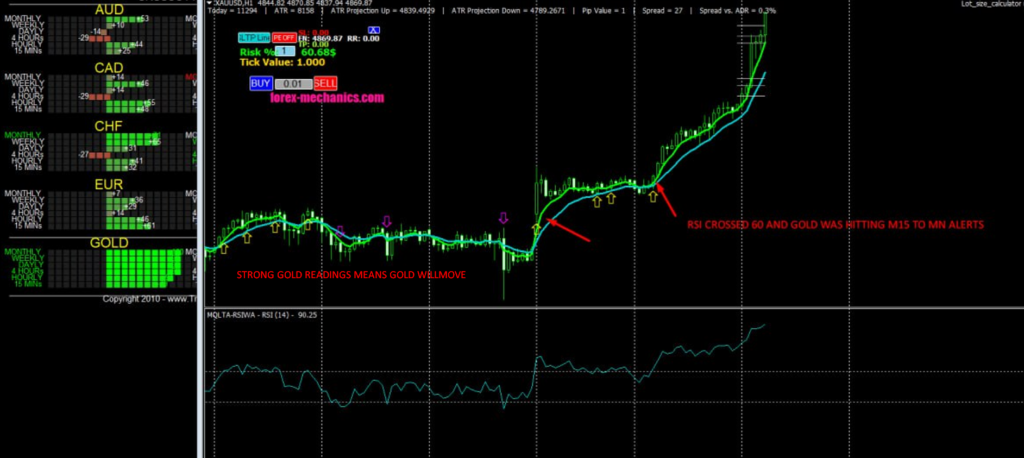
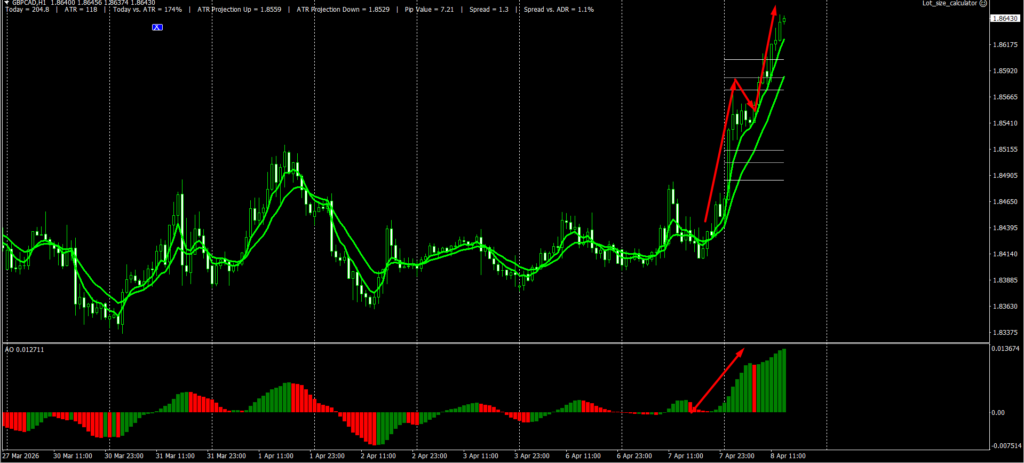
Below you can see 5 and 12 EMA crossover also if you are using an oscillator indicator you can see a crossover above 0. However how do you know if this crossover will sustain well simply by checking if the base currency is strong across the board. Mobile and system alerts when a currency is aligning strong or weak across multiple time frames give you added confirmation to enter and hold your trades.


Lets see few more images


Key Advantages of This Approach

  • Clear directional bias
  • Less chart clutter
  • Faster decision-making
  • Focus on high-probability pairs only
  • Works with any price action strategy
  • Real-time alerts keep you connected to market shifts

Final Thoughts

Real-time multi-timeframe currency strength is not just another indicator.

It’s a framework for understanding the market.

When used correctly, it helps you:

  • Trade with momentum
  • Avoid random setups
  • Build a rule-based system

In simple terms:

It tells you what to trade and you decide how to trade it


Want Access to This Tool + Mobile Alerts?

If you’re interested in using a real-time multi-timeframe currency strength tool with mobile alerts, feel free to reach out directly.

📩 Email: nitin@forex-mechanics.com

I’ll help you:

  • Understand how to use it effectively
  • Integrate it into your existing system
  • Avoid common beginner mistakes

If you’re serious about building a structured forex trading system, this approach can be a game changer.

— Forex Mechanics

Leave a Reply

Your email address will not be published. Required fields are marked *